What is an AI voice agent?
An AI voice agent is software that can conduct a natural phone conversation, understand why a person is calling, follow business rules, and complete an action. Unlike a recorded IVR menu, a capable voice agent can ask follow-up questions, use information from connected systems, book an appointment, confirm an order, update a CRM, or transfer the call to a human with context.
The business value is not simply “AI answering the phone.” The real value is a dependable call workflow that remains available when staff are busy, after hours, or handling higher-value work.
The customer problems voice automation should solve
Businesses usually explore an AI calling agent after a familiar set of problems starts affecting revenue or service quality:
- Missed calls become missed leads because nobody follows up quickly.
- Reception teams repeat the same qualification and booking questions all day.
- Customers call for order status, opening hours, availability, or policy information.
- Appointment changes create manual calendar work and avoidable no-shows.
- Ecommerce and restaurant teams spend hours confirming orders by phone.
- Sales teams receive incomplete lead notes and must repeat discovery questions.
An effective system should remove these bottlenecks without making callers feel trapped. That requires clear conversation design, reliable integrations, and an obvious route to a person when the request needs judgment.
Where AI voice agents create the most value
An AI receptionist can answer inbound calls, identify the caller, capture contact details, explain services, and route priority requests. An appointment agent can check real availability, create or change bookings, and trigger confirmation messages. A lead qualification agent can ask questions about budget, location, urgency, and service fit before placing the opportunity in the correct pipeline. An order confirmation agent can verify products, address details, delivery preferences, or cash-on-delivery intent.
Voice automation is also useful for structured outbound work such as reminders, follow-ups, feedback collection, renewal notices, and dormant-lead reactivation. The best use cases have clear rules and measurable outcomes. Sensitive, ambiguous, or high-risk conversations should remain human-led.
How Techsyhub builds an AI calling solution
Techsyhub starts by mapping the real call journey: why people call, which questions staff ask, what information is required, which systems contain the answer, and when escalation is necessary. We then design conversation paths around the business outcome rather than around a generic script.
The agent can be connected to calendars, CRM records, order systems, helpdesk tools, knowledge bases, WhatsApp, email, and internal dashboards. Every useful action needs validation. A booking should respect availability and time zones. An order confirmation should update the correct record. A qualified lead should arrive with a transcript, summary, source, and next step.
We also define fallback behavior. If confidence is low, the agent should clarify or transfer—not invent. If a tool is unavailable, it should capture the request and create a follow-up task. Call logs, outcomes, failed actions, and handoffs should be visible to operators.
TackleBiz: Techsyhub's voice operations product
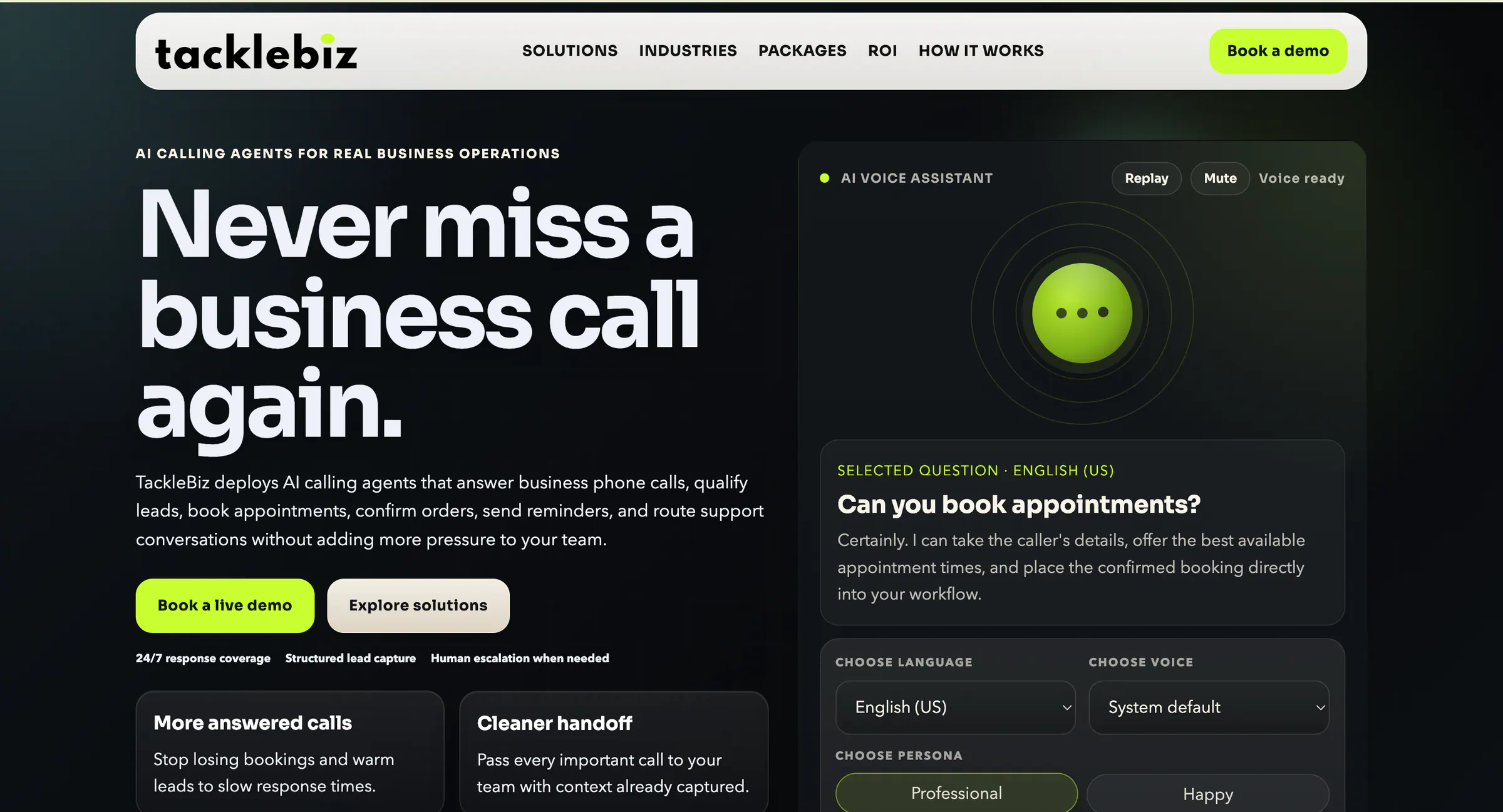
TackleBiz is Techsyhub's AI calling product for inbound and outbound business conversations. It demonstrates how voice, workflow automation, and operational visibility can work together. The platform is designed around receptionist coverage, appointment handling, support routing, lead qualification, order confirmation, multilingual personas, call logs, and analytics.
TackleBiz is also useful proof of how Techsyhub approaches client builds. We do not treat the voice model as the complete product. The surrounding system—business logic, integrations, permissions, dashboards, monitoring, and human handoff—is what makes an AI agent usable in production.
What to measure after launch
- Answer rate and calls recovered outside normal hours
- Qualified leads and appointments created
- Completion rate for confirmations or reminders
- Average handling time for repetitive requests
- Transfer rate and reasons for human escalation
- Tool errors, misunderstood intents, and caller drop-off
- Revenue or staff time influenced by completed workflows
Is an AI voice agent right for your business?
A voice agent is a strong fit when calls follow repeatable patterns, speed matters, and the agent can access reliable business data. It is less suitable when nearly every conversation requires deep negotiation, emotional judgment, or regulated professional advice.
Techsyhub helps businesses identify the first call workflow worth automating, design the conversation, connect operational tools, test realistic scenarios, and launch with monitoring. The objective is a better customer response system—not automation for its own sake.